
BUSINESS STRATEGIST | EXECUTIVE COACH | ENTREPRENEUR
ABOUT
SARAH POOLE.
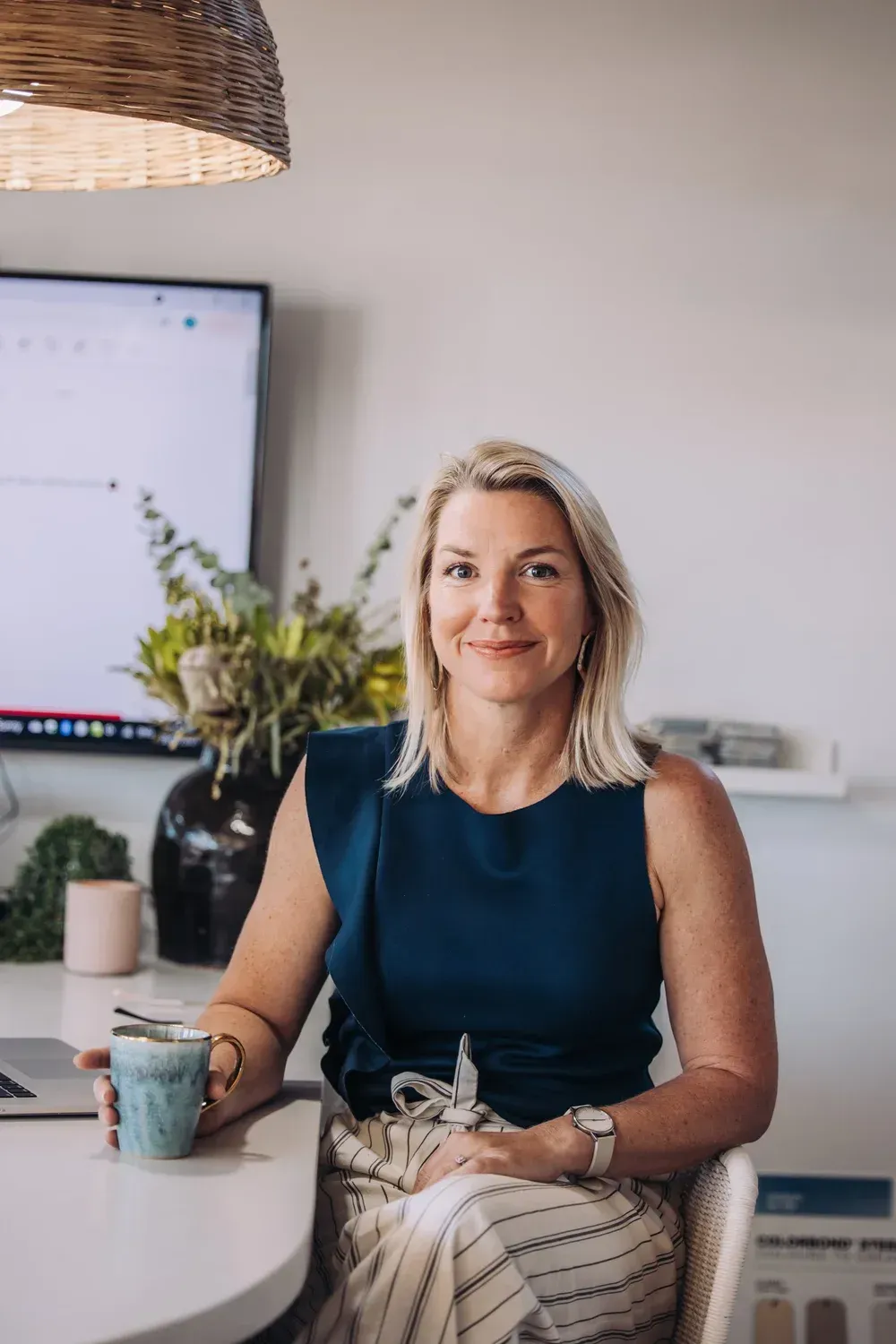
Sarah Poole has spent more than twenty years building, scaling and selling businesses, including a sixty-person operation across six offices in multiple Australian states before selling it.
Since then she's started a number of successful businesses, and worked as an executive coach and business strategist with hundreds of established founders, on the questions that matter most at this stage: how a business is led, how it's structured, and what it takes to grow without the whole thing continuing to depend on the person who built it.
That last question isn't theoretical for her. She's the one who had to answer it, the hard way, before she could help anyone else answer it faster.
IN BUSINESS
20+
Years building, scaling & advising
TEAMS LED
60+
Staff nationality across multiple states
FOUNDERS WORKED WITH
250+
Female founders & Business owners
SARAH’S STORY.
Two decades of building - and learning what it
costs when you
skip the
foundations.
"The founders I work with have already proven they can build something.
The question they're sitting with is whether they can build it differently - in a way that
doesn't cost them everything to sustain."
Sarah built her first business in her mid-twenties, on instinct, momentum and a refusal to stop - the same combination that took it from nothing to a sixty-person operation running across six offices in multiple Australian states. It worked, by every measure anyone outside the business could see. What it cost to keep working was harder to see from outside, and much harder to admit from inside: the whole thing ran on her attention, her decisions, and her ability to keep absorbing whatever the business needed next. She built it before she understood the difference between momentum and structure. She sold it having learned that difference the expensive way.
Alongside that, she co-founded The Fit Mother, ran operations as COO of Be Fit Food Australia through its Shark Tank years, co-founded and helped run Woolgoolga Brewing Co, and took board seats - in both private enterprise and the not-for-profit sector - that put her back in rooms where these same structural questions were being asked by people other than herself.
Somewhere in that stretch, she started her own coaching and strategy consultancy - not as a next career move, but because she could see clearly what most business strategy work was missing. It was built around the business: the numbers, the systems, the market. The founder - the person actually carrying it, making the calls, absorbing the pressure - was treated as incidental to the plan, if she featured in it at all. Sarah built her approach the other way round, with the founder or leader firmly at the centre of the strategy rather than an afterthought to it, because she'd just spent years learning firsthand that a business doesn't actually change until the person leading it does.
That's the work now, done as The Business Flow Co. Based in regional New South Wales, working with founders across Australia and internationally, and deliberately kept to a small enough number of clients at any one time that the attention doesn't thin out. More than 250 of them have been female founders and business owners, and a good deal of what she's learned about this particular stage of business - successful on paper, quietly unsustainable in practice - comes directly from sitting across from them, not from second hand theory.
WHAT THE WORK ACTUALLY IS
Not coaching in the conventional sense. Not a program to complete. Specific work, on a specific business.
01.
Honest assessment
The work starts with an honest look at how the business is actually operating - not the version that's presentation-ready, but the real one: how decisions get made, where accountability actually sits, what's working, what's quietly failing, and what the founder herself is contributing to the pattern, intentionally or not.
02.
Structure and leadership, not motivation
This isn't motivational coaching, and it isn't a marketing consultancy. It's structural and leadership-focused work: the organisation itself, the way leadership is being exercised, what the founder needs to stop doing personally, and what it would take for the business to run without depending on her being available for every decision.
03.
Built around the business
There's no standard program applied the same way to every client. The work is scoped to where a founder's business actually is - its stage, its structure, its industry, the infrastructure already in place - because a generic framework applied to a specific business is exactly the kind of thing that looks like progress without producing it.
What stays consistent is the rigour and the standard of thinking, not the content of any particular session.
04.
What clients consistently describe
Clarity here isn't a feeling - it's a practical state: a clearer definition of the actual problem, a grounded path forward, and structural changes that measurably reduce how much the business needs the founder present day to day.
This work is for founders genuinely willing to look at how their business operates, including the parts that are harder to look at - not for founders looking for validation of the approach they're already running.
The work is for founders who are genuinely ready to examine how their business operates — including the parts that are harder to look at. It is not for founders who are looking for validation of the current approach.
WHAT THE WORK ACTUALLY IS
Not coaching in the conventional sense. Not a program to complete. Specific work, on a specific business.
01.
It starts with an honest assessment
Before anything else, the work requires an accurate picture of where the business actually is - not the version that looks good in a presentation, but the operational reality.
Where decisions are made and why, where responsibility actually sits, what is working and what isn't, and where the founder's own behaviour is contributing to the patterns she is trying to change. That assessment is the foundation for everything that follows.
02.
It focuses on structure & leadership
The changes that make the most difference at this stage are structural and leadership-based. They are not about motivation, mindset, or marketing.
They are about how the business is organised, how it is led, what the founder is doing that she shouldn't be, and what would need to change for the business to operate at a level that doesn't depend on her being available all the time. That is what the Business Flow Framework addresses, directly.
03.
It is built around the individual business
There is no standard program applied uniformly to every client. The work is scoped to what each founder's business actually needs - which varies considerably depending on stage, structure, industry, and what has and hasn't been built already.
What remains consistent is the framework, the rigour, and the standard of thinking brought to every engagement.
04.
What clients consistently describe
The outcome that comes up most reliably in client feedback is clarity - not as a feeling, but as a practical state.
Founders describe a clearer understanding of what the actual problem is, a more grounded sense of the path forward, and structural changes that produce real differences in how the business operates - including, often, changes that allow the founder to be less present in the day-to-day than she has been for years.
The work is for founders who are genuinely ready to examine how their business operates — including the parts that are harder to look at. It is not for founders who are looking for validation of the current approach.
THE BUSINESS FLOW FRAMEWORK
A structured methodology for founders ready to lead at the next level.
The Business Flow Framework was built from direct experience - not from academic research, and not adapted from another context.
It reflects what Sarah has consistently observed across a wide range of founder-led businesses: that the obstacles to genuine, sustainable growth at this stage are structural and leadership-based, and that they respond to structural and leadership-based solutions.
The framework addresses those obstacles directly, across three interconnected areas.
BUSINESS LEADERSHIP
Most established founders are excellent operators who have not yet made the transition to genuine leadership. The distinction matters more than it might appear: operating a business means managing what exists; leading one means making deliberate decisions about what it becomes.
This pillar examines how decisions are made, where accountability actually sits, and what it would take to lead the business at the level it now requires — rather than running it at the level it needed three years ago.
BUSINESS FOUNDATIONS
Growth built on early-stage foundations tends to create fragility over time - not failure, but a kind of brittleness that makes every new phase of growth harder than it needs to be.
This pillar examines six structural areas - finance, client relationships, people and culture, marketing and sales, products and services, and systems — that, when underdeveloped, keep a business dependent on its founder's direct involvement regardless of how capable the surrounding team is.
When these foundations are sound, that dependence reduces substantially.
BUSINESS flow
The condition in which a business operates with genuine structural independence - where the founder's role has shifted from managing the daily present to shaping a considered future.
Flow is not a passive state that arrives with time or with sufficient effort. It is a specific outcome produced by deliberate work across the first two pillars.
It is also what the framework is ultimately designed to produce: a business that generates momentum without requiring the founder to be at the centre of every decision, every problem, and every week.
Everything here is grounded in direct experience.
Not adapted from research, or borrowed from another discipline. The qualifications and roles below represent the practical context from which this practice was built.
EDUCATION & ACCREDITATIONS
Bachelor of Business / Bachelor of Communications
Accredited Coach & Business Strategist - The Elevatory (National)
Accredited Coach - Federal Government Entrepreneurship Program
Accredited Strategist - Tourism Tribe (National)
Accredited Strategist —NAVII(National)
FOUNDER & LEADERSHIP ROLES
Director - Enabling (National Professional Services & IT, 60+ staff, multi-state)
Co-Founder - The Fit Mother (online women’s health platform)
COO - Be Fit Food Australia (Shark Tank Start-Up - National)
Founder - One Fine Day Consulting Services
Co-Founder & General Manager - Woolgoolga Brewing Co
Founder & Chief Strategist - The Business Flow Co.
BOARD & ADVISORY ROLES
Board Member - CHY FM (Not-for-profit)
Board Member - Enabling Pty Ltd (Private enterprise)
Board Member - Woolgoolga & the Northern Beaches Chamber of Commerce
Ready to create your own version of
Business Flow?
let’s map yOur next move
together
“If you’re not careful, you may just end up where you’re heading.” Lao Tzu


